What Is a Neem Tree? Parts, Everyday Uses and Benefits
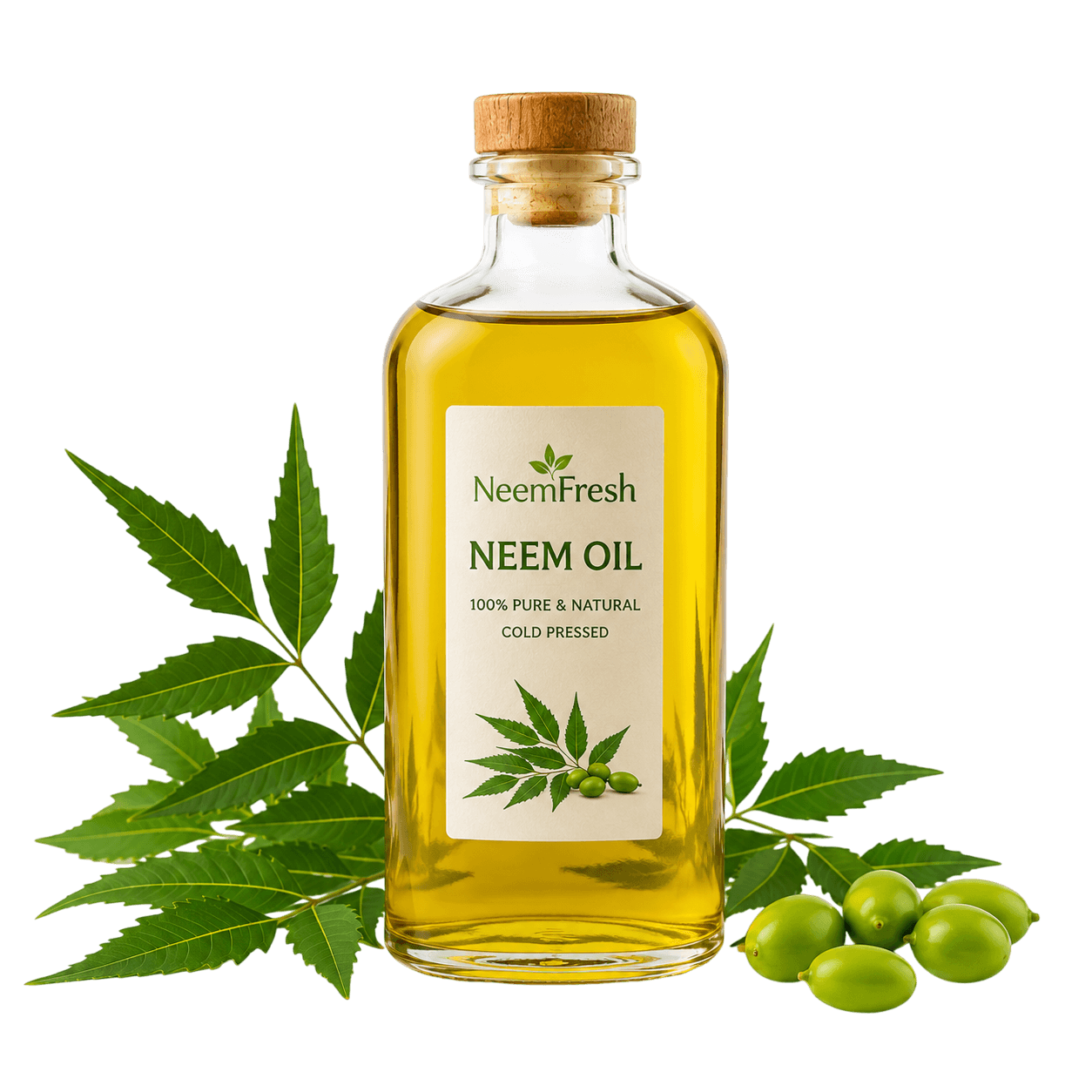
The neem tree is often introduced through a single product: neem oil. The living tree is much more than an oil source. Its broad crown provides shade, its flowers support pollinators, its fruit contains oil-bearing kernels, and the material left after pressing those kernels becomes neem cake. Leaves, twigs and mature wood also have practical uses.
That versatility has encouraged a second, less helpful story: that every neem part is a safe home remedy for almost every problem. It is not. A tree part, a processed ingredient and a finished regulated product are different things. Neem oil is not edible cooking oil, raw leaves are not a standard medicine, and an agricultural pesticide should never be treated like a skin-care product.
This guide explains what the neem tree is, which parts can be used, how they enter day-to-day applications, and where responsible use requires a finished product, professional advice or a current product label.
Important: Do not swallow neem oil, concentrated neem extracts or unidentified neem preparations. Do not use neem as a substitute for medical, dental or veterinary care. Use pesticides only for the crops, sites and pests on the exact local label, and use personal-care products only as directed.
What Is a Neem Tree?
The accepted botanical name of neem is Azadirachta indica A.Juss. It belongs to the Meliaceae, or mahogany, family. Kew's Plants of the World Online records its native range from Assam and Bangladesh east into mainland Southeast Asia. Centuries of cultivation have made it especially familiar across India, and it has been introduced to many other tropical and subtropical regions.
Neem is usually a medium-sized tree with a wide, rounded crown. Under suitable conditions it commonly reaches about 15 metres, although older trees can become larger. It is often evergreen, but it may lose many leaves during severe drought. The tree does not perform equally well everywhere: prolonged cold, frost and waterlogged soil can be serious problems.
How to recognise it
Useful identifying features include:
- pinnate leaves made up of several pointed, serrated leaflets;
- clusters of small white or pale, lightly scented flowers;
- smooth green fruit that becomes yellowish as it ripens;
- a fleshy outer fruit surrounding a shell, seed and kernel; and
- grey to dark, increasingly fissured bark on mature trees.
Correct identification matters. Neem should not be confused with chinaberry, Melia azedarach, another member of the mahogany family whose fruit can be poisonous.
What Is the Best Everyday Advantage of Neem?
Neem's strongest practical advantage is whole-tree versatility with the potential for a relatively low-waste value chain.
One healthy, appropriately planted tree can provide shade and flowers for years. Ripe fruit can supply seeds. The kernel inside each seed can be pressed for oil, while the solid press residue can be used as neem cake in suitable agricultural programmes. Leaves and small prunings can enter managed mulch or compost systems, and wood from a mature or removed tree can become a durable material.
The main seed-processing chain is easy to understand:
ripe fruit → cleaned seed → separated kernel → neem oil + press cake
Leaves, flowers, bark, twigs and wood are separate material streams; they are not interchangeable with seed oil or cake.
This versatility does not automatically make every use sustainable. A low-waste result depends on correct identification, careful harvesting, efficient processing, traceability and a real use for each output. Stripping bark from a living tree, removing roots, planting an invasive species where it is restricted, or making a product with no safety controls is not responsible simply because the source is botanical.
Which Parts of the Neem Tree Can Be Used?
- The living tree and crown: shade, shelter, avenue planting and suitable windbreak or agroforestry roles.
- Leaves: managed mulch, green material for compost, specified neem leaf powder and some traditional storage practices.
- Flowers: seasonal bee forage, honey production and limited regional culinary traditions.
- Fruit pulp: protects the developing seed, feeds some wildlife and can become a processing by-product.
- Seeds and kernels: the main raw material for neem oil and standardised neem-derived ingredients.
- Neem oil: formulated garden, agricultural, soap, cosmetic and selected household or animal-care products.
- Neem cake: plant-derived soil amendment and an input in crop nutrient-management programmes.
- Twigs and small branches: traditional chewing sticks, small wood uses, managed pruning material and biomass.
- Bark and gum: specialised tannin, fibre, gum and formulated-product applications.
- Wood: furniture, tools, poles, fencing, construction and fuel where appropriate.
- Roots: essential to the living tree; harvesting them is destructive and is not a sensible everyday use.
The most responsible daily use is usually not to pick a raw part and improvise. It is to select a traceable, correctly processed product made from the right part for the intended job.
1. The Living Tree: Shade, Shelter and Landscape Value
Before any material is harvested, the growing neem tree already has value.
Shade for homes and public spaces
A mature neem develops a broad crown. In warm regions, that crown can shade courtyards, roadsides, community areas, farm boundaries and livestock-resting areas. Shade is one of the tree's simplest and most dependable everyday benefits.
Planting still requires planning. A small seedling can become a large tree, so consider its mature crown, buildings, boundary walls, overhead lines, underground utilities, drains and access routes. Use local arboricultural advice for spacing and structural pruning rather than repeatedly cutting a poorly placed tree.
Windbreaks and farm boundaries
Neem has been planted in shelterbelts and windbreaks in hot, dry areas. A windbreak can reduce wind speed on its sheltered side, but success depends on orientation, spacing, porosity, local wind patterns and the crops nearby. One row of trees is not a universal solution for every farm.
The FAO has documented neem in dryland planting and wind-protection programmes. Treat those examples as site-specific evidence, not a promise that neem will improve every field.
Flowers and pollinators
Small neem flowers provide seasonal forage for bees and other flower-visiting insects. In some regions, beekeepers produce neem-associated honey. Flowering value is another reason not to over-prune a healthy tree or spray flowering canopies without considering pollinators.
Check whether planting is appropriate
Neem has naturalised outside its original range and is invasive or restricted in some jurisdictions. For example, Australia's Northern Territory lists neem as an invasive weed. Before planting or moving seed to another region, check local biosecurity and invasive-plant rules.
2. Neem Leaves and Leaf Powder
Leaves are the most visible and easily collected neem material. They are also the part most often surrounded by exaggerated home-remedy claims.
Mulch, leaf litter and managed compost
Fallen leaves and small leafy prunings can contribute botanical matter to a managed mulch or compost system. World Agroforestry's 2009 neem profile records the use of leaves and small twigs as mulch and green manure.
For practical garden use:
- Use clean plant material that is free from obvious contamination.
- Mix it with other compost materials instead of treating neem leaves as a complete fertiliser.
- Avoid piling a thick, wet layer against a trunk or plant stem.
- Allow finished compost to mature through the normal process.
- Follow local guidance for diseased material, green waste and crop applications.
Neem leaves do not replace soil testing, balanced plant nutrition or good irrigation.
Neem leaf powder as an ingredient
Cleaned and dried leaves may be milled into powder for defined agricultural, cosmetic or industrial formulations. The powder's suitability depends on leaf identity, cleanliness, particle size, moisture, microbiological quality, contaminants and intended market.
A bag of leaf powder is a raw material, not automatically a ready-to-eat supplement, face mask, animal product or pesticide. Buyers should specify the application and obtain appropriate safety and compliance evidence. See the NeemFresh neem powder product page for sourcing information.
Traditional storage practices
Historical sources record dried neem leaves being placed with stored clothing or grain as an insect-deterrent practice. This is useful cultural context, but loose leaves are not a standardised modern pest-control system. Their condition and active-compound content vary, and damp leaves can introduce odour, staining or mould.
For everyday storage, clean containers, low moisture, stock rotation, inspection and approved pest-management methods are more dependable. Do not mix leaves into food or assume they make contaminated grain safe.
What not to do with leaves
Do not make leaf tea, swallow leaf powder or apply homemade leaf paste to a disease based on a social-media claim. Traditional use and laboratory research do not establish a safe dose, a medical benefit or a compliant finished product.
3. Neem Flowers
Neem flowers are small, pale and fragrant. Their most straightforward practical contribution is as a seasonal nectar and pollen source.
Bee forage and honey
Flowering neem trees can support apiculture where the climate and surrounding forage are suitable. Honey characteristics depend on all plants visited by the bees, so a nearby neem tree does not automatically make a honey batch exclusively "neem honey." Responsible labelling requires evidence about origin and composition.
Culinary traditions require context
Neem flowers appear in certain established regional cuisines, usually in small amounts and with specific preparation methods. That cultural use should not be converted into a blanket recommendation that anyone can collect and eat any neem flower.
Only correctly identified, clean, food-grade material from a trusted supply should enter food, and local food rules still apply. A culinary tradition is not evidence that flowers treat a medical condition.
4. Neem Fruit and Pulp
Neem fruit is a drupe: a thin outer skin and fleshy pulp surround a shell containing the seed and kernel. The fruit's chief commercial importance is that it delivers the oil-bearing seed.
Seed collection begins with ripe fruit
For a quality-oriented supply chain, ripe fruit is collected, depulped, cleaned and dried promptly. Poor handling can cause heating, mould, contamination and loss of quality before the kernel ever reaches an oil press.
Fruit maturity, collection method, drying conditions and storage history therefore affect downstream oil and cake. International buyers should ask seed or oil suppliers how fruit was collected and how quickly the seed was cleaned and dried.
What happens to the pulp?
Birds and bats may eat the fleshy portion and disperse the seed. In processing, separated pulp becomes a by-product. It has been investigated as a substrate for fermentation or biogas, but that is a controlled processing opportunity rather than a casual household recipe.
Do not assume the seed or kernel is edible because the fruit has pulp. Neem seeds, kernels and oil should not be promoted as food.
5. Neem Seeds and Kernels
The kernel is the most commercially important part of the fruit. It supplies fatty oil and naturally occurring limonoids, including azadirachtin-related compounds.
The National Academies' 1992 neem overview notes that the kernel is the main source of materials used in neem pest-management products. Leaves and other tissues also contain bioactive compounds, but they should not be treated as equal-strength substitutes for kernels.
Everyday value through processing
Most people use neem seeds indirectly. A processor can:
- decorticate seed to separate the kernel;
- mechanically press kernels for cold-pressed neem oil;
- recover and condition the solid press residue;
- standardise or formulate ingredients for a specific market; and
- test each lot against an agreed specification.
Buyers should ask for botanical identity, plant part, crop year, origin, moisture, foreign matter, storage history and traceability. Visit the NeemFresh neem seeds page for bulk sourcing information.
Why a homemade seed extract is unreliable
Seed origin, maturity, drying, age and processing can change the concentration of active compounds. A universal online recipe cannot account for those differences. Homemade extracts also lack a registered label, exposure assessment, stability data and disposal instructions.
For crop or household pest control, choose a registered product whose label includes the exact site and target.
6. Neem Oil
Neem oil is obtained from neem seed kernels, but products marketed as "neem oil" are not all equivalent.
Common everyday applications
Properly specified neem oil can enter:
- soap and cleansing-bar formulations;
- shampoos, conditioners and cosmetic products;
- registered garden and agricultural products;
- selected household or animal-care products where the exact label permits; and
- technical formulations developed for a defined industrial use.
The finished formulation determines how a consumer can use it. Agricultural concentrate is not skin oil. Cosmetic-grade raw material is not a ready-to-use pesticide. Neither is cooking oil.
Neem oil, azadirachtin and clarified extract are different
The US Environmental Protection Agency lists azadirachtin and clarified hydrophobic extract of neem oil as separate biopesticide active ingredients. EPA's 2001 technical background fact sheet explains that processing can separate azadirachtin-related substances from the remaining oil fraction.
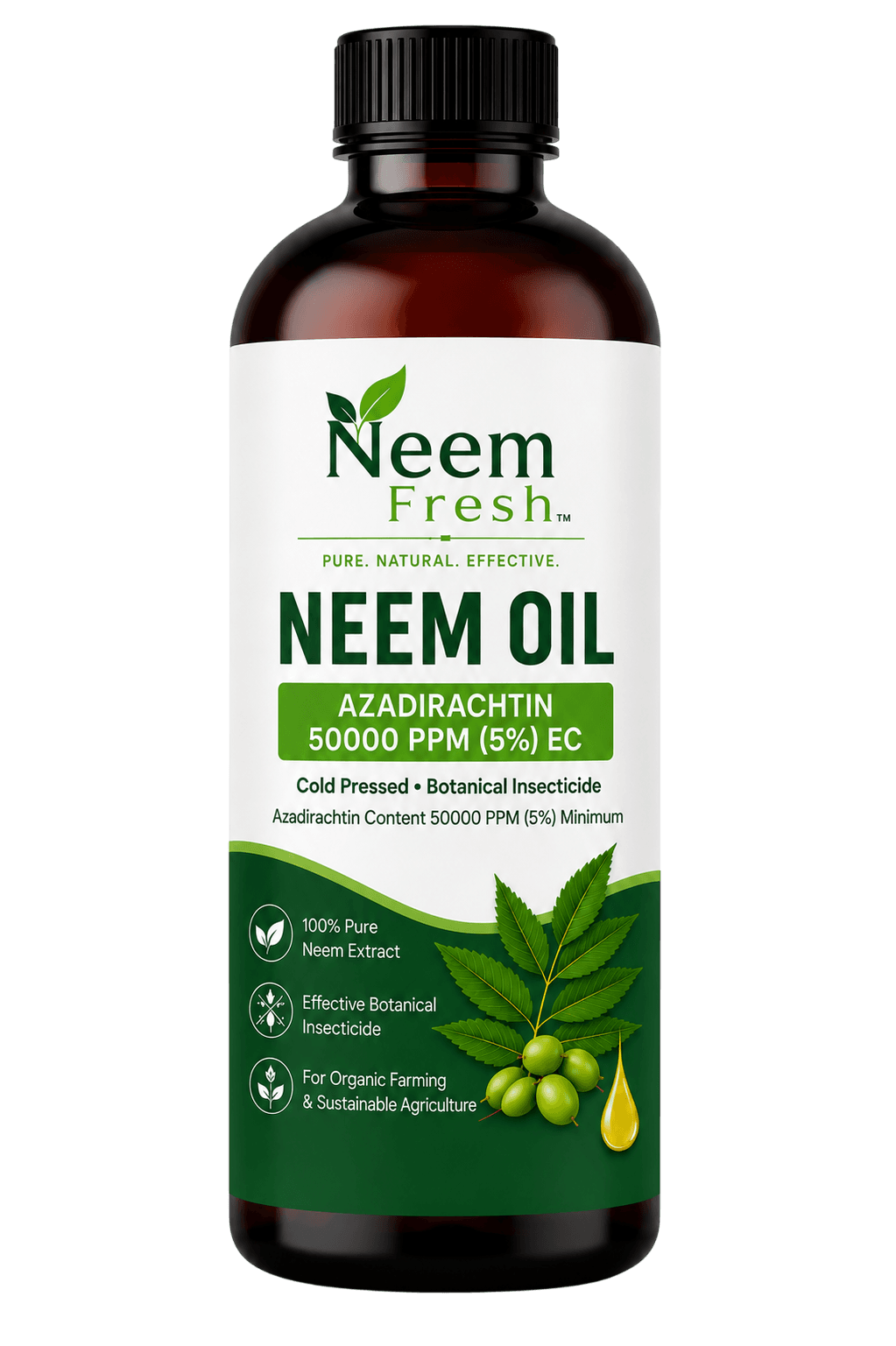
That distinction matters because product composition, mode of action, labelled pests, rates and precautions can differ. Read what neem oil is for a short introduction, then use our detailed neem-oil applications guide for garden, agricultural, cosmetic, soap and animal-care guidance.
Safe daily-use rule
Choose the finished product by purpose and read the entire label. Never swallow neem oil. Published case reports indexed by PubMed describe serious neurological and metabolic effects after ingestion.
For cosmetics, FDA reminds consumers that natural or organic origin does not determine safety. Use a finished product for the intended body area, follow its directions, and stop if an unexpected reaction occurs. See FDA's cosmetic safety guidance.
7. Neem Cake
Neem cake is the solid residue left after oil extraction from neem seed or kernels. Depending on the process, it can include kernel meal and hull material. It is not made by simply drying leaves, and it is not the same product as neem powder.
Soil and crop programmes
Neem cake can contribute plant-derived organic matter and nutrients to a soil-management programme. Current examples from the Indian Council of Agricultural Research include neem cake among organic amendments used in orchard soil-health work.
Practical use still depends on:
- the crop and growth stage;
- soil test results and existing nutrient plan;
- cake moisture, particle size and residual oil;
- the declared composition and contaminants;
- application method and timing; and
- local organic-input and fertiliser rules.
There is no responsible universal handful, cup or kilogram rate for every garden and farm. Follow the product information and obtain local horticultural or agronomic advice. Our neem cake guide explains the material in more detail.
What neem cake is not
Do not treat neem cake as human food or casual pet or livestock feed. Residual bitter and bioactive compounds vary with the raw material and extraction process. "Natural" and "left over after pressing" do not mean edible.
8. Neem Twigs and Small Branches
Twigs have one of neem's most familiar traditional uses: the chewing stick, often called datun in parts of South Asia.
Traditional oral cleaning
Fraying and using a clean twig can provide mechanical cleaning. Small clinical studies have examined neem chewing sticks, but they do not establish every raw twig as a safe replacement for modern oral care. Species identification, cleanliness, diameter, technique, freshness and gum condition all matter, and rough use can injure tissue.
The American Dental Association's home-care guidance recommends brushing for two minutes twice daily with fluoride toothpaste and cleaning between teeth. Readers interested in a neem oral-care product should choose a properly formulated, labelled product and ask a dentist how it fits their needs.
Do not use a twig to self-treat gum disease, tooth pain or infection. Those problems need dental assessment.
Pruning material and small wood
Healthy prunings may enter managed compost, chipping or permitted biomass systems. Use correct pruning cuts and clean tools. Removing large branches without understanding tree structure can create decay, weak regrowth and falling-limb hazards, so significant work belongs with a qualified tree professional.
9. Neem Bark and Gum
Neem bark has historically supplied tannins and coarse fibre, while gum or resinous exudate has entered specialised applications. Bark-derived ingredients also appear in some professionally formulated products.
These are processing uses, not an invitation to strip a neighbourhood tree. Removing a complete ring of bark interrupts the movement of water and sugars and can severely damage or kill the tree. Wounds can also admit decay organisms.
Claims that bark cures fever, diabetes, ulcers, infections or another disease should not be presented as everyday advice. Research interest and traditional practice do not replace clinical evidence, a safe dose, manufacturing controls or legal authorisation.
For commercial use, source bark or gum through a documented, sustainable supply chain and define identity, contaminants, extraction method and intended application.
10. Neem Wood
Neem belongs to the mahogany family and produces useful, relatively durable wood. Documented applications include:
- furniture and cabinetry;
- tool handles and agricultural implements;
- poles, posts and fencing;
- carts and general construction; and
- fuelwood or charcoal where legal and appropriate.
The wood must be seasoned and worked correctly because fresh material can split or warp. Its resistance to some wood-damaging insects is useful, but "resistant" does not mean termite-proof or maintenance-free.
Use timber from legal, traceable harvesting. When neem wood is burned, use a permitted, efficient appliance with appropriate ventilation; botanical origin does not make smoke harmless.
11. Neem Roots
Roots anchor the tree, obtain water and nutrients, and help it tolerate dry periods. They are sometimes included in lists of traditional neem remedies, but digging them out damages the tree and can affect stability.
For day-to-day use, the best use of neem roots is to leave them functioning. Avoid trenching, paving or changing soil level in the root zone without professional advice. Do not harvest roots for home medicine.
How to Use Neem Responsibly in Everyday Life
Here is a practical way to match the job to the right neem form.
If you want shade
Plant only where neem suits the climate and is not invasive or restricted. Allow enough room for a mature crown and roots, and plan establishment watering and long-term tree care.
If you want help with garden pests
Identify the problem first. Select a registered product that names the plant, site and target, then follow its rate, timing, protection, pollinator and disposal directions. Use it as one part of integrated pest management, not as a spray for every garden problem.
If you want a soil amendment
Choose specified neem cake, check the declared composition, and match the rate to soil and crop needs. Do not confuse cake with leaf powder or assume either replaces a complete nutrient plan.
If you want skin, hair, soap or cleansing products
Choose a finished product made for that use. Read the ingredients, instructions and warnings. Do not apply a garden pesticide, technical oil or unknown bulk material to a person.
If you want oral-care benefits
Use evidence-based daily brushing and interdental care. Treat neem toothpaste or another finished oral product as a formulated product, not proof that chewing any twig or bark will treat a dental problem.
If you want to reduce waste from a tree
Prioritise the living tree's shade and ecological role. Use clean leaf litter in a managed system, send suitable prunings to local green-waste processing, collect fruit only where permitted, and recover wood responsibly at the end of the tree's useful life.
Traditional Use, Research and Proven Product Use Are Different
Neem has a long cultural history. That history deserves respect, but three evidence levels should not be mixed:
- Traditional use documents what a community has practised. It does not by itself establish the identity, dose, safety or effectiveness of a modern product.
- Laboratory or early clinical research can identify a promising effect under controlled conditions. It does not prove that a homemade preparation will deliver the same result.
- A regulated or properly assessed finished product has a defined composition, intended use, directions and supporting evidence appropriate to its category and market.
This distinction is especially important for health, pesticide and animal-care claims. In the United States, FDA explains that a cosmetic marketed to treat or prevent disease may legally be a drug. Review FDA's guidance on cosmetic claims.
Neem Safety: Claims and Practices to Avoid
Do not assume that neem:
- cures diabetes, cancer, malaria, infections, eczema or another disease;
- "detoxifies" the body or boosts immunity;
- is edible because it is a plant;
- is safe for every child, pregnant person, animal, pollinator or aquatic organism;
- can be applied undiluted to every person's skin or every plant;
- makes a pesticide automatically legal or approved for organic production;
- releases oxygen 24 hours a day or has a unique ability to purify all air;
- repels every mosquito, termite or household pest simply by growing nearby;
- works at one universal homemade mixing rate; or
- can be planted anywhere without ecological consequences.
Keep neem oils, powders, extracts and pesticides in their original labelled containers, away from children, animals, food and feed. Never transfer them to a beverage container. If ingestion or a serious reaction occurs, contact local emergency or poison-control services promptly rather than attempting a home remedy.
Use on pets or livestock only when the exact finished product names that species and purpose. The National Pesticide Information Center's neem oil fact sheet reports adverse reactions in some cats after neem-oil exposure, which is a strong reason not to improvise.
How Buyers and Manufacturers Should Specify a Neem Material
Before ordering, answer these questions:
Which botanical material is it?
State Azadirachta indica, the plant part and the processed form. "Neem" is not enough. Leaf powder, whole seed, kernel, cold-pressed oil, clarified extract and cake have different compositions and uses.
What is the intended application?
Define whether the material is for a registered pesticide, cosmetic, soap, soil input, industrial product or research. The end use determines the required evidence.
How was it processed?
Request the extraction or milling method, processing aids, temperature controls and handling history. For seed materials, fruit collection, depulping, drying and storage are important.
What does the batch evidence show?
Use a specification and batch-specific certificate of analysis. Depending on the product, relevant parameters may include moisture, particle size, oil content, azadirachtin result, free fatty acids, peroxide value, foreign matter, microbiological quality, pesticide residues, heavy metals or other destination requirements.
Is the supply traceable and responsible?
Ask for origin, lot traceability, harvesting practices and documentation supporting any organic or sustainability claim. Natural origin does not prove certification.
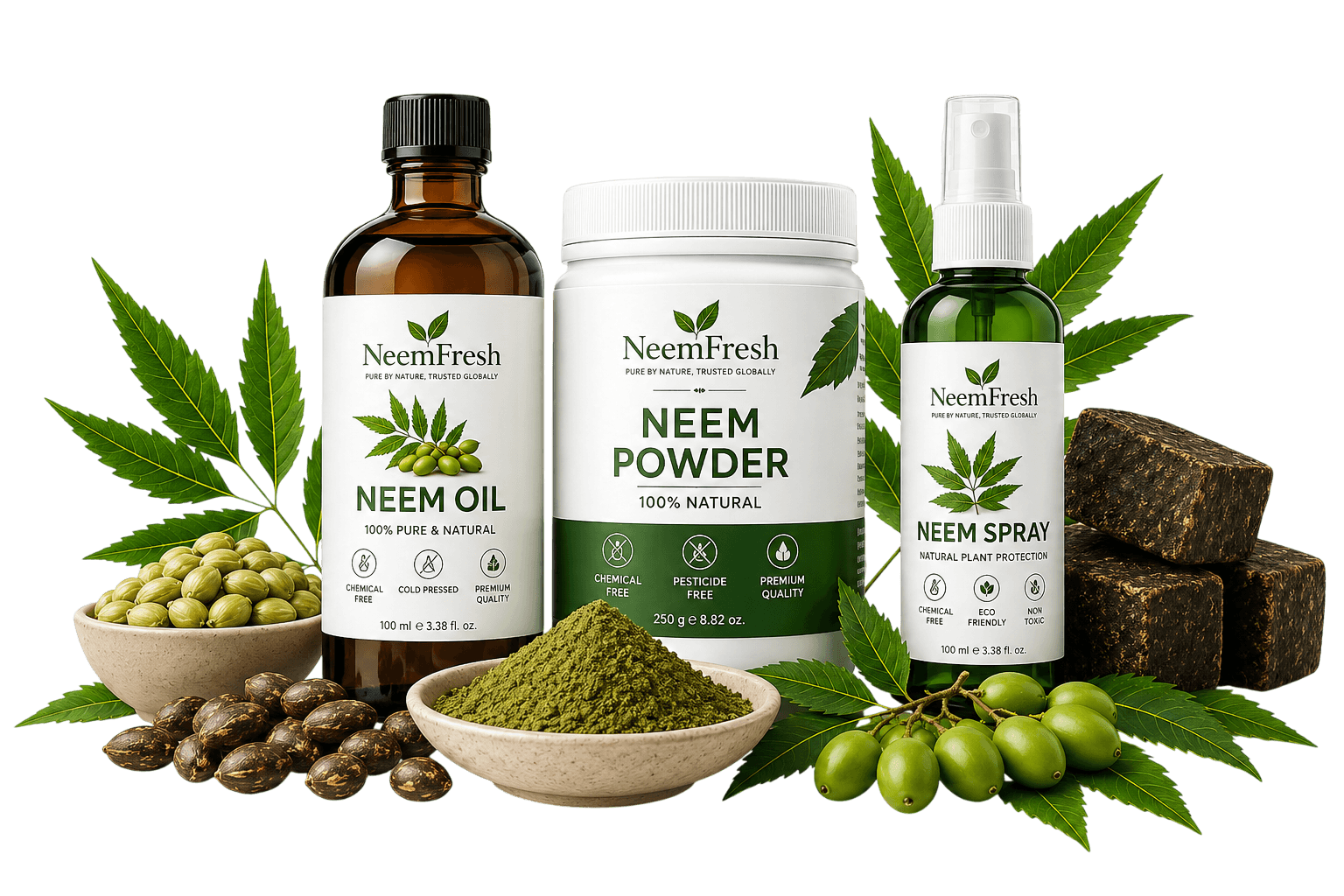
Explore NeemFresh neem products, or contact our team with the required plant part, application, destination, specification, packaging and volume.
Frequently Asked Questions
Which part of the neem tree is most useful?
It depends on the job. The living crown is most useful for shade. Kernels are the main commercial source of oil and azadirachtin-related ingredients. Neem cake is useful in suitable soil programmes, while mature wood can enter durable products.
Are all parts of the neem tree usable?
Many parts have documented uses, but not every part is sensible or safe for daily household use. Roots are best left intact, bark harvesting can harm the tree, and raw plant parts should not be assumed edible or medicinal.
Can neem leaves be eaten every day?
This guide does not recommend eating neem leaves or drinking leaf preparations. Composition and dose are not standardised, and traditional use is not a substitute for medical or food-safety guidance.
Can neem oil be applied directly to skin or hair?
Use a finished cosmetic intended for the body area and follow its label. Do not apply an agricultural or technical product to a person, and do not assume undiluted oil is suitable for everyone.
Do neem leaves keep insects away from clothes and grain?
Dried leaves have a documented traditional storage use, but they do not guarantee control. Clean, dry, sealed storage, regular inspection and approved pest management are more reliable. Do not add loose leaves to food.
Is neem cake the same as neem leaf powder?
No. Neem cake is the solid seed or kernel residue after oil extraction and may include hull material. Leaf powder is made from dried, milled leaves. Their composition, specifications and applications differ.
Does planting a neem tree keep mosquitoes away?
No reliable guidance supports treating a nearby tree as complete mosquito control. Remove standing water, use screened spaces and follow local public-health recommendations. Use only authorised repellent or pesticide products for their labelled purpose.
Is every neem product suitable for organic farming?
No. Organic acceptance depends on the complete formulation, intended use, certification programme and market. Confirm the exact input with the certifying agent before application.
Is neem safe for pets?
Do not apply raw neem oil, leaf paste or agricultural pesticide to an animal. Use only a product labelled for the exact species and purpose, and consult a veterinarian when uncertain.
Is using neem automatically sustainable?
No. Neem can support a versatile material chain, but sustainability depends on appropriate planting, legal sourcing, responsible harvesting, efficient processing, safe formulations and useful destinations for by-products.
Use the Right Part for the Right Purpose
Neem is valuable because one tree supports many distinct uses, not because every part does the same job.
Protect the living tree when shade and landscape value are the goal. Use leaves and prunings thoughtfully in managed organic-matter systems. Process ripe fruit and kernels under quality controls. Choose labelled oil products for their intended use, specified cake for soil programmes, and legal timber for durable goods.
That right-part, right-process, right-purpose approach is the best everyday advantage neem can offer.
Official and Technical References
This guide was reviewed on August 3, 2026. Product rules, registrations and invasive-plant requirements can change, so verify current information in the destination market.
- Kew Plants of the World Online: Azadirachta indica
- USDA Forest Service neem species profile
- World Agroforestry neem species profile (2009)
- National Academies: The Neem Tree (1992)
- National Academies: Industrial Products from Neem (1992)
- US EPA biopesticide active ingredients
- US EPA introduction to pesticide labels
- US EPA integrated pest management principles
- FDA cosmetics safety guidance
- FDA cosmetics labelling claims
- American Dental Association home oral care
- National Pesticide Information Center neem oil fact sheet
- PubMed case report: neem oil poisoning
- Northern Territory Government: neem invasive-plant information