How to Import Neem Oil from India: An International Buyer's Guide
Importing neem oil successfully is not simply a matter of finding the lowest price per kilogram. The real task is to buy the correct product for your intended use, prove that each batch meets your specification, and arrange a shipment that can legally enter your market.
A drum described only as "cold-pressed neem oil" leaves too many questions unanswered. What is the intended application? Is the oil sold as a raw cosmetic ingredient, an agricultural active, a formulated pesticide, a soap-making input or an industrial material? Which parameters are guaranteed? Which test method is used? Who is responsible for destination-market registration and import clearance?
This guide gives international buyers a practical route from first inquiry to final delivery. It is written for importers, distributors, formulators, agricultural-input companies, personal-care manufacturers and private-label teams sourcing neem oil from India.
Regulations depend on the product, claims, formulation and destination. Treat this guide as a commercial due-diligence framework, not legal advice. Confirm classification, permits, labels and import requirements with your customs broker and the competent authority in your market before placing a commercial order.
The Short Version: A Seven-Step Buying Process
A controlled purchase usually follows this sequence:
- Define the intended use and destination country.
- Confirm the regulatory route before agreeing claims or labels.
- Issue a written product specification and RFQ.
- Verify the exporter, manufacturing controls and documents.
- Test and approve a representative sample.
- Agree the contract, Incoterms® Rule, inspection and payment terms.
- Release the shipment only after the document and batch checks pass.
Skipping one of these steps often creates cost later through re-testing, relabeling, port storage, rejected goods or a product that cannot be sold for its intended use.
1. Decide What You Are Actually Importing
The words "neem oil" can describe materially different commercial products. Start by defining the product in relation to its use.
Agricultural use
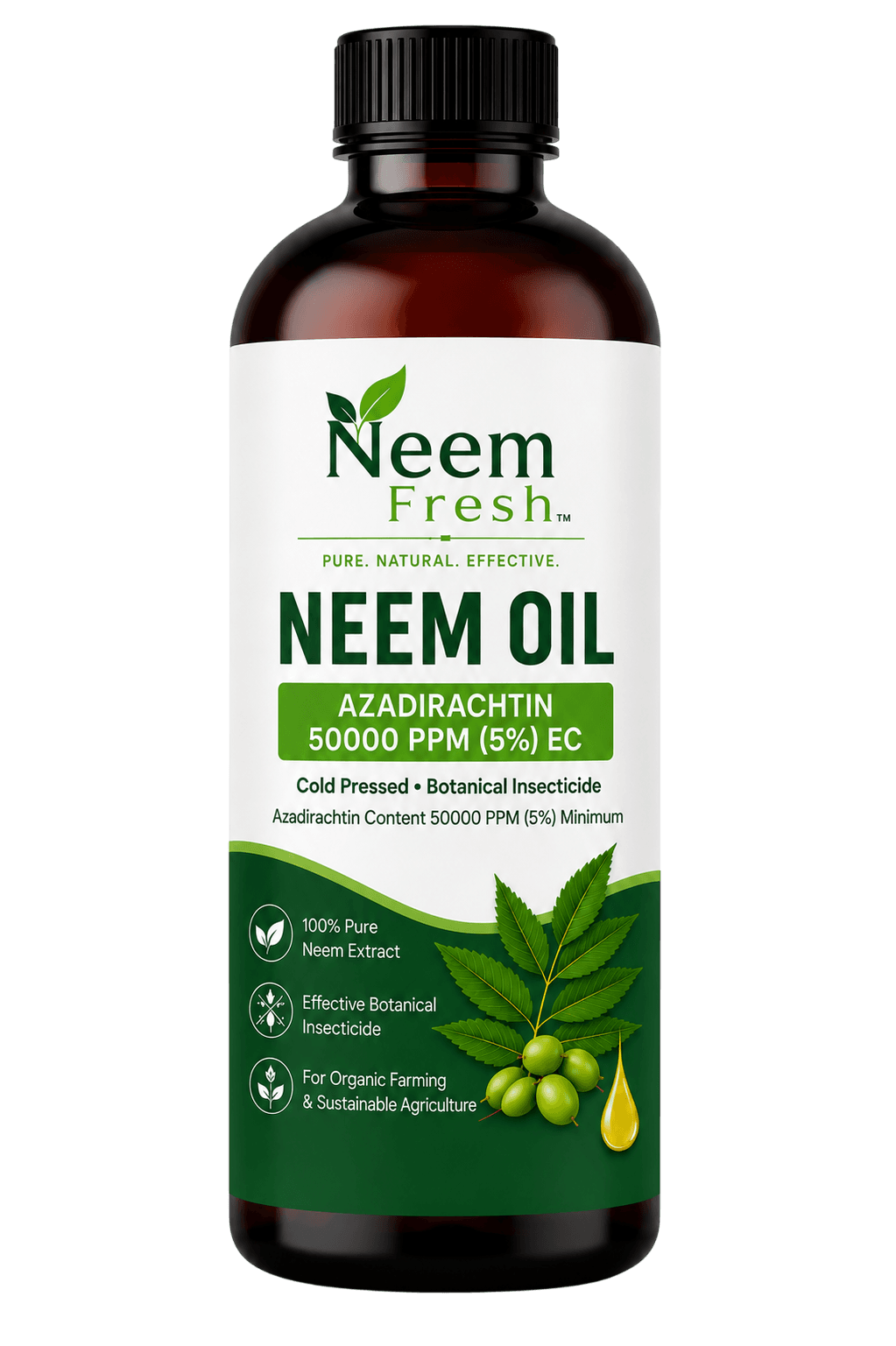
Neem oil sold with claims to repel, control or kill pests may be regulated as a pesticide or plant-protection product. A destination authority may evaluate the active substance, complete formulation, manufacturing site, label, intended crops, application rate and residue position.
Do not assume that the words "natural," "organic" or "botanical" remove pesticide-registration requirements. In the United States, the Environmental Protection Agency explains that neem oil is not an exempt minimum-risk active ingredient. In the European Union, active substances are assessed at EU level while plant-protection products are authorised by Member States; buyers can check the European Commission's pesticide information and database.
If agriculture is the intended market, identify whether you need:
- unformulated cold-pressed neem oil;
- a standardised technical or manufacturing-use material;
- a clarified extract;
- an emulsifiable concentrate or other finished formulation; or
- a private-label end-use product.
These are not interchangeable from a regulatory or performance perspective.
Cosmetic and personal-care use
A buyer using neem oil in soap, shampoo, cream or another personal-care product should define whether the shipment is a bulk ingredient or a finished cosmetic. Claims also matter. A moisturising or cleansing claim can lead to a different route from a claim to treat eczema, acne, infection or another condition.
For the United States, FDA states that imported cosmetics must comply with the same laws and regulations as domestic products, and it warns that intended-use claims can cause a product to be regulated as a drug or as both a cosmetic and a drug.
Other uses
Veterinary, household, soap-making and industrial uses can each have their own rules. Even when the oil itself appears similar, its documentation, label, contaminant limits and market permissions may differ.
The practical rule is simple: classify by composition, intended use and claims—not by product name alone.
2. Build a Written Neem Oil Specification
A useful quotation starts with a specification. Without one, two suppliers can quote different products under the same name and both appear competitive.
Ask the supplier to confirm the following in writing.
| Specification point | Why the buyer needs it |
|---|---|
| Botanical source | Confirms the plant identity and the part used |
| Manufacturing method | Distinguishes cold pressing, extraction, clarification and formulation |
| Full composition | Identifies carriers, emulsifiers, preservatives or other additions |
| Active or marker specification | Important where azadirachtin or another marker is commercially relevant |
| Physical and chemical limits | Creates measurable batch-acceptance criteria |
| Contaminant limits | Aligns the material with its end use and destination |
| Appearance and odour | Helps detect unusual oxidation, dilution or processing changes |
| Packaging and net weight | Determines handling, freight and warehouse requirements |
| Shelf life and storage | Establishes the conditions needed to maintain quality |
| Test method | Makes results comparable between supplier and buyer laboratories |
Depending on the application, a specification may include moisture or volatile matter, acid value, density or specific gravity, saponification value, iodine value, insoluble matter, microbiological limits, heavy metals, pesticide residues or other buyer-defined parameters. Not every test belongs in every specification.
Be precise about azadirachtin
If azadirachtin content affects your product or registration, do not accept a number without context. Record:
- the analyte being reported;
- the unit, such as ppm or mg/kg;
- the sampling procedure;
- the analytical method;
- the laboratory;
- the acceptance range; and
- how the result will be handled if the buyer's test differs from the supplier's result.
A higher number is not automatically a better purchase. The correct target is the specification that supports your approved formulation, stability, label and application.
Require a batch-specific certificate of analysis
A certificate of analysis should identify the batch or lot, manufacturing or testing date, specification limits, actual results and test methods. A generic "typical analysis" is useful for initial discussion but should not be treated as release evidence for a commercial batch.
Agree before ordering whether the controlling result will come from:
- the supplier's quality-control laboratory;
- an independent laboratory;
- the buyer's laboratory; or
- a defined referee laboratory if results are disputed.
3. Verify the Indian Exporter and Manufacturer
Verification is more valuable than collecting logos from a website.
Confirm the legal exporter
Ask for the supplier's legal name, registered address, tax details, bank-beneficiary name and Importer-Exporter Code. India's Directorate General of Foreign Trade states that an Importer-Exporter Code is mandatory for export and import activities, subject to specified exemptions.
Make sure the legal entity on the quotation, invoice, bank account and export documents is consistent. If an agent, trading company and manufacturer are different entities, document each party's role.
Verify certificate scope
If a supplier presents ISO, GMP, organic or other certificates, check:
- the issuing body;
- certificate number;
- legal entity and site address;
- products and activities covered;
- issue and expiry dates; and
- the issuer's online verification record, where available.
A valid certificate for one facility or activity does not automatically cover every product, site or claim.
Understand the actual manufacturing controls
Useful questions include:
- How are neem seeds received, graded and stored?
- How are lots separated and traced?
- Which process parameters are controlled?
- How is the oil filtered or clarified?
- How are tanks and filling lines cleaned?
- How are retain samples managed?
- How are deviations and customer complaints investigated?
- Can the manufacturer trace a finished batch back to raw-material lots?
- What is the normal production capacity and lead time?
- Which steps are performed by subcontractors?
For higher-value or regulated orders, consider a remote or on-site audit and an independent pre-shipment inspection.
4. Approve a Representative Sample
A good sample process prevents an approved sample from becoming irrelevant to the shipment.
The sample should carry:
- product name and grade;
- batch or pilot-lot number;
- date;
- net quantity;
- storage instructions; and
- a certificate of analysis matching that sample.
Ask whether it came from routine production, a pilot batch or a specially prepared laboratory sample. If you approve it, define how the commercial lot will be shown to be equivalent.
A practical approval sequence is:
- Review the specification and technical documents.
- Test a supplier sample.
- Run a formulation, compatibility or stability trial.
- Place a pilot order if the commercial risk justifies it.
- Approve a pre-shipment sample from the actual production batch.
- Keep sealed retain samples with both buyer and supplier.
Record acceptance in writing. Statements such as "same as sample" are difficult to enforce unless the sample identity and measurable specification are part of the contract.
5. Confirm Destination-Market Compliance Before the Purchase Order
The importer normally has the best access to local regulators, customs brokers and product-registration advisers. Use that access before goods move.
United States
If neem oil is sold or distributed with pesticidal claims, review FIFRA requirements with a qualified adviser. EPA states that pesticides sold or distributed in the United States, including imported pesticides, generally require registration. Foreign and domestic pesticide-producing establishments can also have establishment-registration and reporting obligations.
For cosmetic use, confirm whether the shipment is an ingredient, bulk cosmetic or finished product, and ensure the entry description and intended use are accurate. FDA's cosmetics import guidance explains how claims can affect whether a product is treated as a cosmetic, drug or both.
European Union and European Economic Area
For agricultural products, check active-substance status, the complete product authorisation and the Member State where it will be marketed. An active substance position alone does not automatically authorise a finished product.
For substances and mixtures, the EU importer or an appointed Only Representative should assess REACH and CLP responsibilities. ECHA explains that registration can apply to substances imported at one tonne or more per year, subject to the substance identity, role and available exemptions. Do not assume either that neem oil is automatically exempt or that registration is always required; document the assessment for the actual material and supply chain.
Other markets
Canada, the United Kingdom, Australia, Japan, the Gulf states and other markets operate their own chemical, agricultural-input, cosmetic and customs regimes. Ask the local authority or adviser about:
- product or active-substance registration;
- importer licences;
- ingredient restrictions;
- safety-data-sheet and language requirements;
- approved claims;
- label content;
- container or recycling obligations;
- testing and certificate requirements; and
- customs classification and duties.
Never rely on a supplier's statement that a product is "approved worldwide."
6. Agree the Export and Product Documents
Document requirements vary, but the following list is a strong starting point.
Core commercial and transport documents
- signed commercial invoice;
- packing list;
- bill of lading or air waybill;
- certificate of origin when required or commercially useful;
- insurance certificate when required by the sales term;
- inspection certificate when agreed; and
- any bank or letter-of-credit documents.
Indian Customs uses ICEGATE for electronic export processes, including Shipping Bills. ICEGATE guidance identifies the bill of lading or air waybill, commercial invoice and packing list among the core trade documents, while noting that additional supporting documents depend on the commodity and regulatory requirements. India's Trade Connect platform supports applications for Certificates of Origin.
Product and quality documents
- agreed product specification;
- batch-specific certificate of analysis;
- technical data sheet;
- current safety data sheet;
- full or confidential composition statement as required;
- manufacturing-process declaration where needed;
- country-of-origin declaration;
- shelf-life and storage statement;
- packaging specification;
- label artwork approval; and
- test reports or certificates required by the destination.
Requests such as "non-GMO," "organic," "food grade," "cosmetic grade" or "pesticide grade" should be converted into defined, supportable requirements. A marketing phrase is not a substitute for a standard, certificate scope or test limit.
Permits and special certificates
Depending on destination and use, the shipment may also need an import permit, pesticide registration evidence, phytosanitary document, health or free-sale certificate, REACH documentation, prior notification or another authority-specific record.
Do not request a phytosanitary certificate automatically for every neem-oil shipment. Ask the destination plant-protection authority or broker whether it is required for the processed oil and packaging in question.
7. Choose Packaging for Quality and Logistics
Packaging must protect the oil and work through the full logistics chain.
Discuss:
- container material and chemical compatibility;
- drum, jerrycan or intermediate bulk container size;
- new versus reconditioned packaging;
- closure, gasket and tamper evidence;
- light and oxygen exposure;
- headspace and filling method;
- net and gross weight tolerance;
- pallet pattern, strapping and stretch wrap;
- batch and handling labels; and
- container-loading plan.
Ask for packaging dimensions and gross weights before calculating freight. Confirm whether the destination warehouse can unload and handle the selected pack size.
If solid-wood pallets, crates or dunnage are used, confirm compliance with the destination's wood-packaging rules. ISPM 15 provides internationally accepted phytosanitary measures for wood packaging material. Processed-wood products such as plywood can be treated differently under the standard, so record the actual packaging material.
Neem oil quality can change with heat, light, oxygen and time. Ask the manufacturer for storage and stability data relevant to its product rather than applying an unsupported universal temperature or shelf life.
8. Compare Quotations on Landed Cost, Not Unit Price
A commercial offer should clearly state:
- product and specification revision;
- quantity and tolerance;
- packaging;
- currency and unit price;
- minimum order quantity;
- production lead time;
- shipment window;
- payment terms;
- named port or place;
- Incoterms® 2020 Rule;
- documents and tests included;
- quotation validity; and
- treatment of non-conforming goods.
The International Chamber of Commerce explains that Incoterms® Rules allocate delivery tasks, costs and risks. Write the chosen rule with a precise named place, for example, "FCA [named facility or terminal], India, Incoterms® 2020." Avoid using only "FOB India" or "CIF Europe," because neither identifies the required port.
Your landed-cost model should include:
- product cost;
- export packaging;
- inland transport and terminal charges;
- inspection and testing;
- export documentation;
- international freight;
- cargo insurance;
- import duty and taxes;
- customs-broker and authority fees;
- port, handling and delivery charges;
- bank and currency costs; and
- a contingency for delay, examination or storage.
Ask a customs broker to confirm the tariff classification. Do not choose an HS code solely because another neem-oil shipment used it; composition and intended use can affect classification.
9. Protect the Payment and Contract
For a first order, balance supplier cash-flow needs with buyer risk.
Common controls include:
- a smaller paid sample before a commercial order;
- a pilot shipment;
- staged payment tied to production or inspection milestones;
- a documentary collection or letter of credit where appropriate;
- independent pre-shipment inspection;
- verified bank details; and
- a written quality-claim process.
Verify any bank-detail change through a known contact using a second channel. The beneficiary should make sense in relation to the contracting exporter. Payments to an unrelated personal account are a serious warning sign.
The sales contract should identify the specification, approved packaging, document list, inspection rights, delivery term, governing law or dispute mechanism, and remedy for non-conforming goods.
10. Use a Shipment-Release Checklist
Before the goods leave India, check the actual batch—not only the original quotation.
Product release
- Batch number matches the COA and labels.
- Results meet every contractual limit.
- Pre-shipment or retain sample is sealed and identified.
- Packaging type and count match the order.
- Containers are clean, closed and undamaged.
- Net and gross weights reconcile.
Document release
- Names and addresses are consistent.
- Product description is accurate and not misleading.
- Quantity, currency, price and Incoterms® Rule match the contract.
- Invoice and packing-list totals reconcile.
- Origin statement or certificate is correct.
- Transport-document instructions are approved.
- SDS and technical documents are current.
- Destination permits and registrations are valid.
- Label text and language are approved.
Logistics release
- Carrier booking and route are confirmed.
- Container or truck condition has been checked.
- Loading photos are available if agreed.
- Seal number is recorded.
- Insurance is active where required.
- Original or electronic documents will reach the correct party on time.
11. Inspect Again on Arrival
Arrival inspection should be part of the original agreement.
Record:
- seal and container condition;
- number and condition of packages;
- batch numbers;
- visible leakage or damage;
- received weight;
- sample identity; and
- laboratory results where incoming testing is required.
Photograph damage before unloading changes the evidence. Notify the carrier, insurer and supplier within the contractual time limit. Keep affected stock segregated until the claim or quality review is complete.
Red Flags International Buyers Should Not Ignore
Pause the transaction if a supplier:
- refuses to identify the legal exporter or manufacturing site;
- provides a COA without a batch number, method or actual results;
- promises that one product is legal for every country and use;
- cannot explain whether the oil contains additives;
- changes bank details without a credible explanation;
- offers certificates that cannot be verified;
- quotes a price far below comparable offers without explaining the difference;
- pressures you to skip sampling or inspection;
- uses pesticidal claims while avoiding regulatory questions;
- cannot connect the commercial batch to the approved sample; or
- gives inconsistent product descriptions across the label, invoice, SDS and COA.
A slow, precise answer is more valuable than an immediate promise that every request is possible.
Copy-and-Send RFQ Template
Use this structure when contacting an Indian neem-oil exporter:
Product: Cold-pressed neem oil or required formulation
Intended use: Agriculture, cosmetic, soap, veterinary or other
Destination country:
Required registration or market status:
Specification: Attach limits and test methods
Azadirachtin or marker requirement, if applicable:
Quantity: Trial order and expected annual volume
Packaging: Pack size, pallet and label requirements
Private label: Yes or no; attach artwork requirements
Documents: COA, SDS, specification, origin and destination-specific documents
Inspection: Supplier, independent or buyer laboratory
Delivery term: Named place plus Incoterms® 2020 Rule
Target shipment date:
Payment preference:
Please confirm: MOQ, lead time, capacity, quotation validity and sample process
The more complete the RFQ, the more comparable the quotations will be.
Frequently Asked Questions
What is the correct HS code for neem oil?
There is no safe universal answer for every neem product. Classification can depend on composition, processing, formulation and intended use. Ask the exporter for its proposed Indian classification, then have your destination customs broker confirm the import classification before shipment.
Is a phytosanitary certificate always required?
No. Requirements depend on the destination, degree of processing, product and packaging. Confirm with the destination authority or broker. Solid-wood packaging can have separate ISPM 15 requirements even when the oil itself does not require a phytosanitary certificate.
Does "organic neem oil" mean it can be sold as an organic pesticide?
Not automatically. Organic certification and pesticide registration answer different questions. Verify the organic certificate's scope and the destination's rules for both product registration and organic claims.
Should I buy on FOB, CIF or another term?
Choose the Incoterms® 2020 Rule that matches the parties' logistics capability and desired control. For containerised or multimodal shipments, discuss FCA, CPT or CIP with a qualified freight adviser rather than automatically requesting FOB or CIF. Always include the named place or port.
Can the Indian supplier handle all regulatory work?
A capable supplier can provide technical documents and support registration, but the importer or local registration holder usually retains important destination-market responsibilities. Define the division of work before ordering.
How much should I order first?
Use a sample or pilot quantity large enough to test your formulation, packaging, market and import process without exposing the business to an unnecessary full-container risk. The right quantity depends on the supplier's MOQ, your test plan and freight economics.
A Better Way to Source from India
India offers deep neem knowledge, access to raw material and experienced manufacturers, but geography alone does not guarantee quality. The best transaction combines a precise buyer specification with a transparent supplier, batch-level evidence and a documented import plan.
Start with the regulatory route. Then compare suppliers against the same RFQ, approve a representative sample, contract against measurable limits and release only the batch that passes.
That process does more than reduce risk. It gives both buyer and exporter a clear definition of success.
If you are planning a trial order, bulk shipment, formulation or private-label project, send NeemFresh your destination, application, specification and expected volume. Our export team can respond with the relevant product, packaging, testing and document options.
Official Reference Links
This guide was reviewed on August 2, 2026. Regulations can change, so verify the latest position for your shipment.
- DGFT Foreign Trade Policy: IEC and digital export services
- Indian Customs ICEGATE
- India Trade Connect Certificate of Origin services
- US EPA pesticide registration overview
- US FDA importing cosmetics
- European Commission EU Pesticides Database
- ECHA REACH registration
- IPPC ISPM 15 wood-packaging standard
- ICC Incoterms® Rules